Watson’s
Pocket Pistol
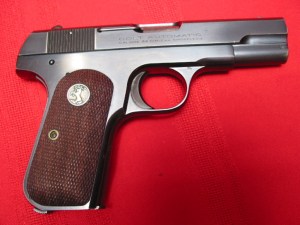
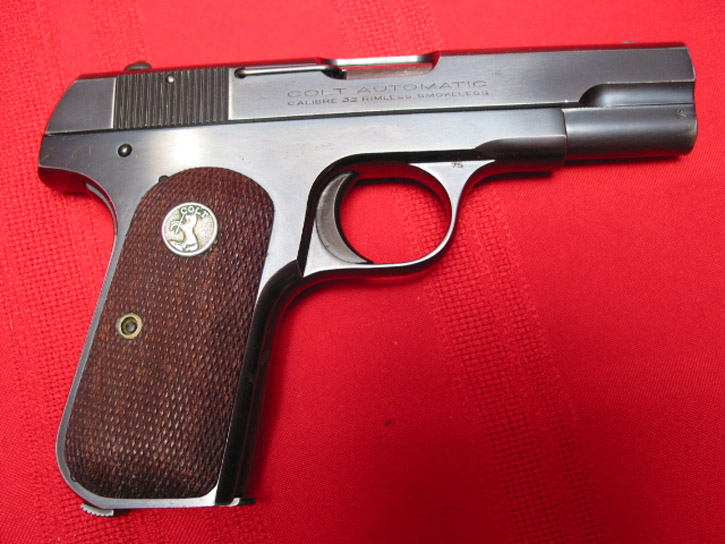
The Colt Model .32 Pocket Pistol was invented by John Browning who would go on to design the ubiquitous Colt M1911 .45 ACP pistol still in use today, a hundred years later, by the US Military. The pistol was made in .32 ACP (Automatic Colt Pistol) and in 1908 was redesigned to shoot .380 cal.
The Model 1903 was a very popular pistol. Light (33 oz.), thin, compact, and with an eight round magazine was easy to carry concealed in a pocket. It was also adopted as the US Army’s issue handguns for General Officers and used up into the 1970’s. Gangsters such as Al Capone were enamored of the weapon and it even reflected in the gangster movies of the ‘30’s and ‘40’s. James Cagney and Edgar G. Robinson always carried a Colt
pocket pistol when playing the bad guy.
About 570,000 Pocket Pistols were made from 1903 until 1945. Considering the quantity made, they still bring a good price. The simplicity of design, double safety (grip and manual), covered hammer (doesn’t get caught on a coat pocket when you need it NOW) and magazine capacity, all made the Model 1903 a very popular gun.
Model
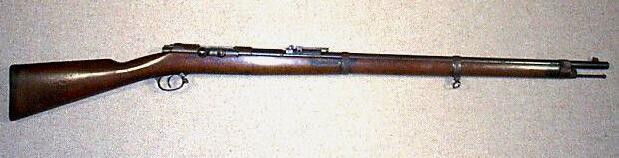
1871 Mauser

Irish Volunteers and members of the Irish Citizen Army were both equipped with the I.G. (Infanterie-Gewehr) Mod 71 German Mauser. In Ireland they werecommonly called Howth Mausers. These long barreled rifles were obsolete German infantry weapons. They had been brought into Ireland by the volunteers in a response to the Ulster Unionist forces of Carson arming themselves. Carson had armed the Unionists in order to fight if Home Rule became a reality. Nine hundred Mausers were landed at Howth and another 600 at
Kilcool (it is odd how often the Kilcool landing is forgotten about). At Howth the British tried to confiscate the weapons from the Volunteers but were decidedly unsuccessful. The Crown Forces only got about eight weapons. On the march back to their barracks they
were harassed by local citizens and in retaliation the army fired on the crowd at Bachelors Walk on the Liffey River. The incident helped the Volunteer cause.
There are contradictory accounts about the exact amount of ammunition that was landed. It varies between 25 and 29 thousand rounds. In either case, that’s less than 20 rounds per man. The Volunteers would have to learn to shoot without pulling the trigger.
The M71 was a single shot, bolt action rifle that fired an 11mm, black powder cartridge, roughly .45 cal. This type ammunition was not readily available in the United Kingdom so each round was precious. The .303 cartridge was the standard of the British Empire and would be used by both sides in other weapons.
The M71 was sold to China, Japan, Serbia and the Transvaal (another country that had fought the British Empire, twice).
Krag-Jorgensen

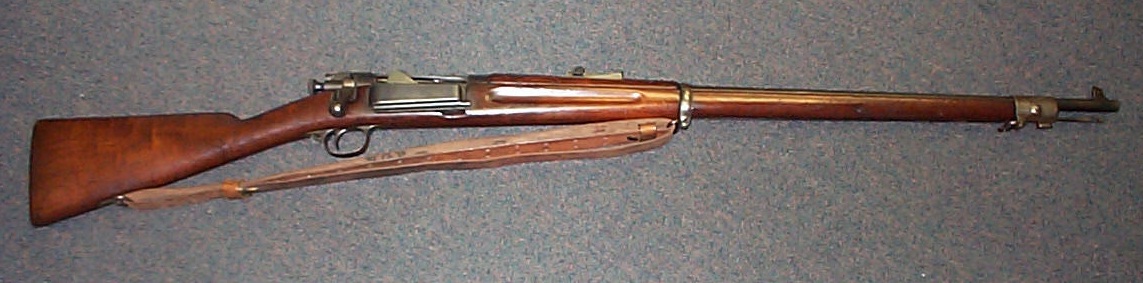
There were only a handful of “Krags” taken from the rebels at the end of the rising in 1916 but how they arrived in Ireland is quite a story. The Krag was designed by Ole Johannes Krag and Erik Jorgensen, two Norwegians, in the late 1880’s and by 1892 it was the standard US Army Rifle. It was produced under license in caliber .30-40 US. The Krag was the standard rifle of Norway and Sweden (in the Swedish 6.5mm) and would be produced through WWII under Nazi control.
The Krag had a unique feature; the magazine loaded from the side. Where most military rifle used a “stripper clip” of five rounds that loaded from the top with the bolt open, the
Krag could be loaded with loose rounds from the side with the bolt closed and ready to fire. This type side loading meant that soldiers could “top off” the magazine without waiting to run out of bullets.
But how did they end upin Dublin in 1916? One of the buyers for Krags was the government of Zuid-Afrikaansche Republiek (ZAR), commonly known as the Transvaal. You might remember that Major MacBride (who fought at Jacob’s Biscuit Factory) had led
the Irish Brigade in support of the Boers against England in the Second Boer War. Norway had delivered 300 Krags to the Transvaal forces shortly before the war. These rifles were remnants of that lost conflict. In fact, the slouch hats, with the sides turned up, worn by the ICA was in honor of the Boers. The Second Boer War had not been overly popular in Ireland.
Short, Magazine, Lee-Enfield

The SMLE or Short, Magazine, Lee-Enfield No.1 Mark I was officially adopted into British Service in 1902. It was the work horse of the British Army in WWI and up through 1926. It remained in service through WWII and beyond. The No. 1 was made in huge numbers in the Mark III configuration adopted in 1907. The Enfield, as we’ll call it for short, was a mating of the Lee bolt action and magazine (formerly used in the Lee-Metford) and the Enfield rifling system used for small bore smokeless powder cartridges. The “Short” in SMLE refers to the length of the rifle. It is shorter than the old infantry rifle and longer than a carbine. The “magazine” is self-explanatory.
The Enfield was issued in .303 caliber, a rimmed, bottleneck cartridge. This same cartridge was used in the machine guns used by the British army and made resupply easier. Numbers of these weapons could be “bought” from troops stationed in Ireland that had been stolen or “lost” from local armories. During the rising they were taken from the dead and captured. The advantage to these weapons was the availability of the ammunition. The
Enfield was known both for its rapidity of fire and for its accuracy.
Dutch Beaumont-Vitali

Like the Krag above, there were a few Model 1871/88 Dutch Beaumont-Vitali rifle found among the rebels. The Beaumont was originally a single shot rifle like the Howth Mausers. In 1888 the Italian Vitali Box magazine was added to all Dutch weapons to make them repeaters. The strange shape of the box magazine is due to the fact that they used a coil spring under the follower to lift each round into position rather than a leaf spring like
other magazine designs. By 1916 these weapons were on the market as surplus. The Beaumont-Vitali was a black powder cartridge in caliber 11.35 x 52 mm. That meant that it’s ammunition was not interchangeable with the Howth Mauser. Another problem for people trying to keep the rebels supplied.
The
Lewis Machine Gun
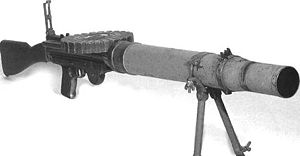
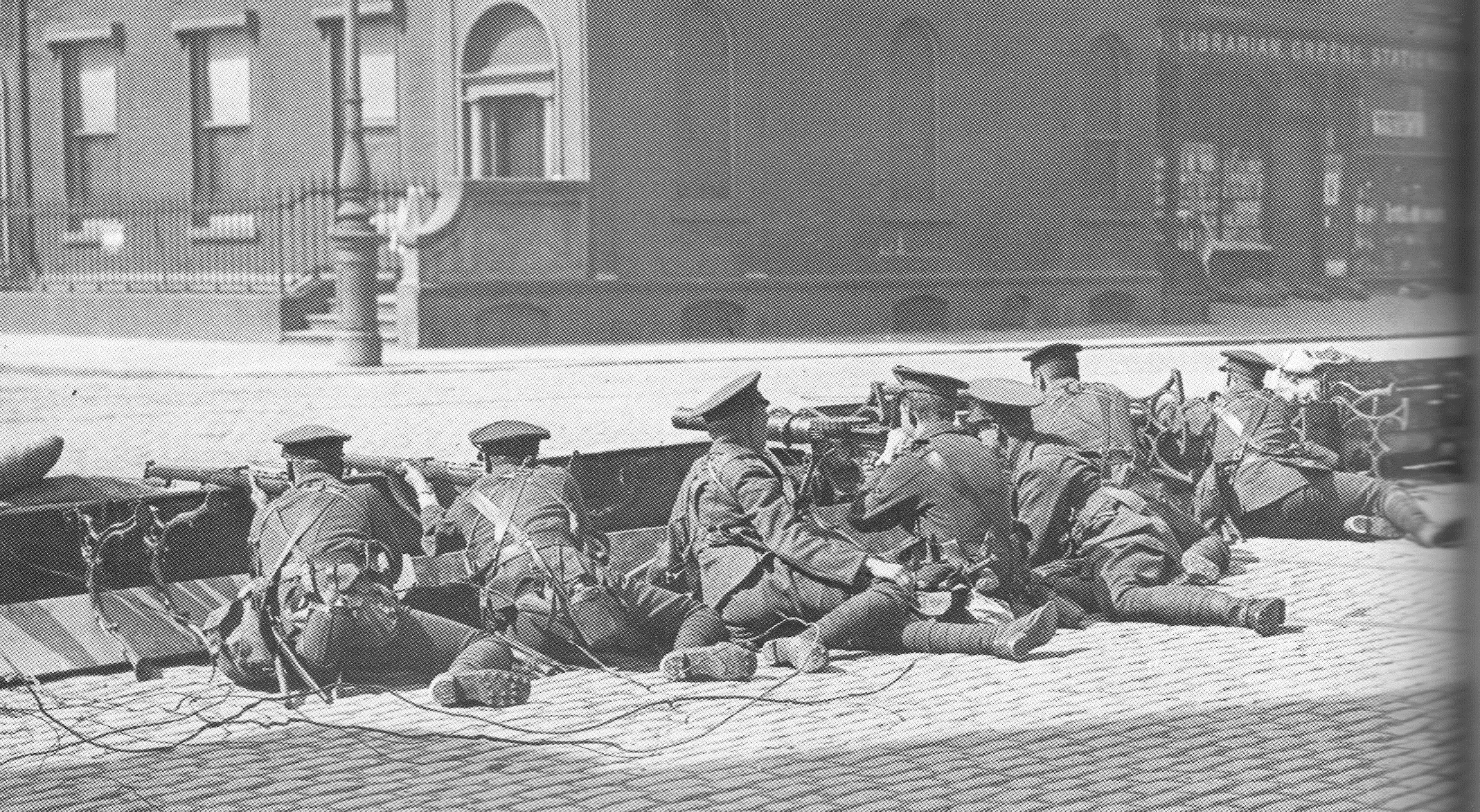
The “Gun, Lewis, .303-cal.” was a tremendous innovation. It put the power of a machine gun in the hands of soldiers down to the squad level. It was light (comparatively), could be carried by one man and one or more ammunition bearers. The pan magazine on top held 47 or 96 rounds and was quickly interchangeable. The British made great use of these against the rebels.
The Lewis Gun was invented by a US Army Colonel named Issac Lewis in 1911. Lewis met road blocks from General William Crozier who was head of Ordnance. The two never got along and Crozier didn’t like the idea of a light machine gun. In 1913 Lewis retired from the army and took his invention to Belgium where he got a contract from the Belgian government and set up shop. The Belgian weapon would use the British .303 round. To work out some production issues he worked with the Birmingham Small Arms Company (BSA). In 1914 the British Government purchased a license to build the weapon themselves and soon there were tens of thousands of them. The Lewis gun was also adapted for use on aircraft as well as for infantry. The US Marines and Navy also adopted the Lewis Gun but never the Army. The Model 1914 was manufactured both by BSA in the UK and Savage Arms in the US. Nations were still using the Lewis through the Korean War. They are now one of the Holy Grails of Class III collectors.
You might remember the Lewis Gun being used by Chewbacca the Wookie in Star Wars as a laser machine gun. Emergency Correction – I have been informed by a reliable source (thanks, Bobby) that Chewy carried a “Bowcaster” and the Lewis Gun was used by the “Imperial Troops” as the “Imperial, T-11 Repeating Blaster”.
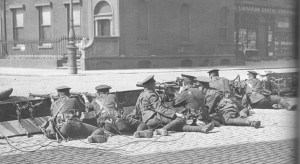
Lewis Gun in action in Dublin 1916
Mauser C96
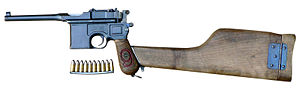 The Mauser C96 was the first truly successful semi-automatic handgun. It was originaly manufactured by Mauser in Germany and quickly became popular, seeing action in the Boer War only three years later. By the end of production in 1937 Mauser had made over one million. Add to that the unlicensed production in Spain and China and no one knows what the real numbers are.
The pistol was originally produced in 7.63 x 25 mm. The one shown above has a 9 inscibed on the handle which designates it was produced in 9mm so the ammunition could be shared with the 9mm Luger. The 7.63 cal. was the most powerful pistol cartridge until the introduction of the .357 Magnum in 1935. The most identifiable parts of the pistol are the box magazine forward of the trigger guard, the detachable wood stock that also acts as a holster and the straight blowback action.
This weapon was exceedingly popular with both Winston Churchill, who carried a brace of them in the Boer War, and the Irish Volunteer officer corps. In English Speaking countries the weapon was nicknamed a “Broomhandle” based on the form of the grip. In Ireland it was frequently called a “Peter the Painter” since a C96 was allegedly used by the anarchist Peter the Painter in the Sidney Street Siege of 1911. The C96 was another star of the Star Wars movies. Han Solo carried one on his hip all the time.
Webley Revolver
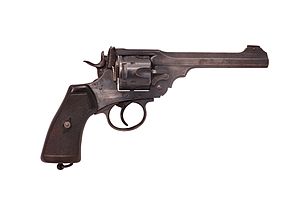
 The Webley Revolver was the standard sidearm of the British Forces. It was issued starting in 1887 and had the advantage of being a break-top action. That means it opened by folding in half exposing all six chambers in the cylinder at the same time. When it was opened it ejected all the spent cartridges at the same time and could be loaded quickly. It was issued in .455 caliber with a very heavy and effective bullet. It saw minor changes over the years but the Mark VI was the most common in the WWI era.
British
18-pounder, Quick Fire Gun
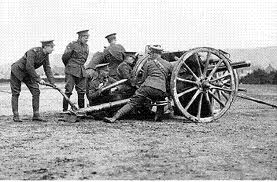 The Volunteers were at a definite disadvantage when it came to heavier weapons systems. There was a training battery of artillery at Athlone when the Rising started and it was quickly brought into play to put down the rebels. The 18-pounder was actually a light artillery piece that had very limited ammunition choices available. When the Great War started in 1914 the British Army had numerous batteries of 18-pounders. Their only ammunition choice was a Shrapnel round which was anti-personnel not anti-materiel. Major General Shrapnel (1761-1842), an artillery officer of the British Army, designed an artillery round, that , when fired, went down range before expelling hundreds of musket balls toward the enemy. It worked wonderfully on troops in the open, but once in buildings or dug in, this type round was very survivable. As WWI progressed to a trench warfare stalemate it became obvious that High Explosive (HE) and other artillery shells were needed for the 18-pounders. By late September 1914, HE was available, but in true cost saving measures Amatol was chosen as the filler for the shells. While cheap to make (ammonium nitrate and TNT) they lacked explosive power.
The probability is that most of the artillery rounds used against the Volunteers was shrapnel and therefore less than effective. Individual notes by serving Volunteers claim that incendiary rounds were used against them. In this they were undoubtedly incorrect since that type round was not available for 18-pounders until 1918 except in anti-aircraft batteries. What was probably used was HE rounds which surely will start fires, especially
in an urban area.
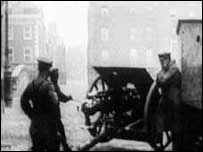
18-pounder in use in Dublin
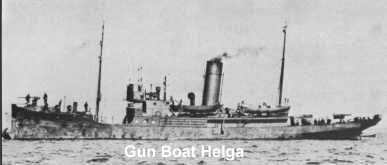
Gunboat
Helga

The gunboat Helga was used to shell Liberty Hall and was the first heavy weapon used. The Helga had been a fisheries boat before the war and was pressed into service patrolling the Irish waters for German submarines. She was near when the Rising began and because of her shallow draft was able to get up the Liffey and near the rebel positions. The Helga at this time was actually His Majesty’s Patrol Yacht, Helga. She was armed with a 12-pounder
forward in the eyes and a 6-pounder Hotchkiss gun aft. She also had machine
guns.

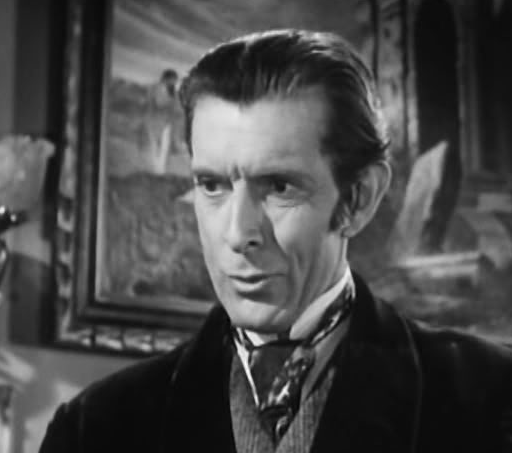
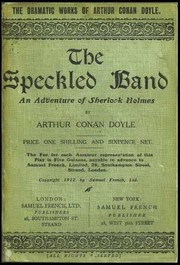 The role of Watson has not been limited to the small or the large screen. It has also been portrayed on the stage. One of the earliest of these was by Claude King, a man that will become much important in another role in Hollywood years later.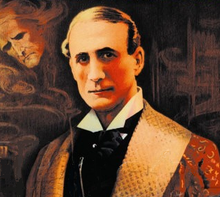









 Murder in the Library by Felicia Caparelli is an outstanding mystery novel. Okay, that’s the short review. The longer one goes something like this; after reading the first two pages I thought, Oh No, Chick Book! I was wrong. I admit, if the movie doesn’t have John Wayne, Sam Elliott or Tom Selleck and the book isn’t by Doyle, Haggard or Captain King, I have a tough time. This book, however kept me reading all the way through. It doesn’t take much from Doyle but a remote similarity to some of the plot from Hound, but it does take a lot of style from Agatha Christie.


 Kieran McMullen