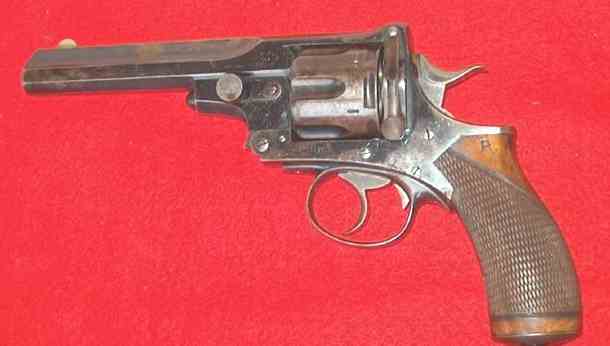
There has always appeared to be a lot of disagreement on exactly what was the “service revolver” that Watson carried in his many adventures. Doyle never really says and every movie has a different one, everything from an R.I.C. to a colt Single Action Army. For this book I have ventured that Watson, being a practical fellow and having grown up with firearms, is equipped with a Webley-Pryse six shot revolver in .476 calibre. Why? Well, the Pryse was patented in 1876 and by 1878 was becoming popular with army officers. It’s one big advantage was the fact that all 6 chambers could be loaded with safety and it had a self-extracting cartridge system. At the time, most 6 shot revolvers had to be carried with only 5 rounds loaded since the firing pin sat on the primer of a cartridge in a loaded chamber. This direct contact meant that there was a possibility of unintended discharge if the hammer was struck say by dropping the gun. The Pryse had a rebounding hammer which meant that when the hammer was at rest it did not make contact with the primer cartridge, thereby giving the user one more round before reloading. The self extraction system meant all the used cartridges were remover from the chamber on breaking the pistol open and new rounds could be reloaded quickly. Other pistols had to have the expended cartridges removed one at a time. Not a good thing when the enemy is pouring over the barricades!
The British Soldiers of the Infantry used the Martini- Henry Rifle. A breech loading, lever action, single shot rifle that fired a .577/450 bottleneck cartridge. It was extremely accurate to 400 yards and had a rapid rate of fire of 20 rounds a minute even though it was a single shot weapon. It was considered quite an improvement from the Snider conversions to the old muzzleloading Enfields that the Indian troops carried. It was always thought a good idea to keep the Indian soldiers one step behind in technology for two reasons: it was a place to send obsolete equipment and should there be another mutiny the Indian army would be outgunned.
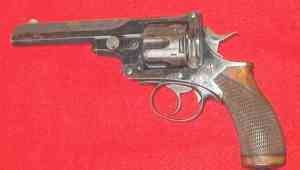
Webley-Pryse
The 66th Foot was armed with the Martini-Henry rifle, the native infantry had the Snider rifles and the cavalry had the Snider carbine.
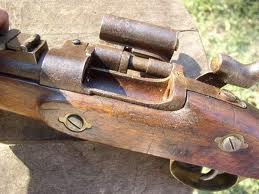
Snider with open breech
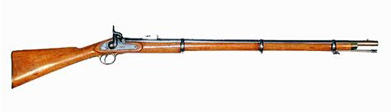
The Snider was an Enfield1853 rifled musket that had been converted to breech-loading and could fire 10 to 15 .557-caliber rounds per minute out to an effective range of 400 yards.
The Afghan infantry were armed with a vast assortment of weapons depending if they were regular units of the Khan or local tribesmen.
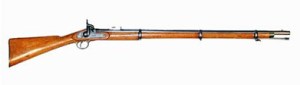
1853 Enfield Rifled Musket
The regular infantry had either imported or locally fabricated copies of the 1853 Enfield muzzle-loading rifles that fired two to three shots per minute. Some had locally made Snider rifles, but with quality problems the effective range was reduced to about 300 yards. The tribesmen were armed with an assortment of flintlock muskets with a 50- to 80-yard effective range and a rate of fire of one shot in two minutes.

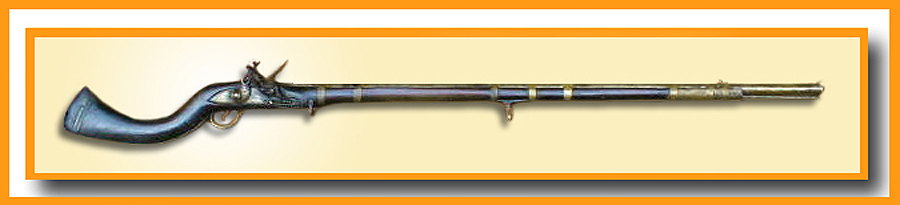
Jezail
There was also the locally fabricated, flintlock smoothboe musket, The Jezail. The weapon that Dr Watson had long attributed to causing his wounds. But had it?
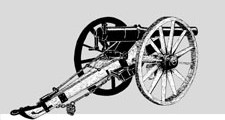
3in Rifled Armstrong
The Afghan army had better artillery than the British and more of it! particularly its six very effective breech-loading, 3-inch rifled Armstrong guns. They could fire five rounds per minute. The Afghan artillery also had 23 other smoothbore weapons of varying sizes. Some sources say the number of Afghan cannon was as high as 32. The Afghan artillery’s effectiveness significantly influenced the battle, constantly pushing forward to the line of British infantry.
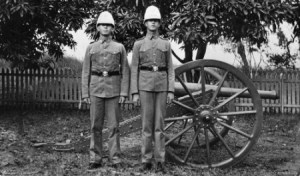
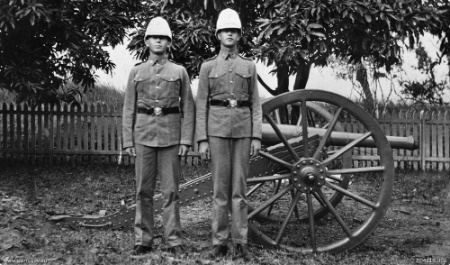
RML 9-pounder With Gunners
The British artillery had six 9-pounder muzzle-loading rifled guns manned by well trained cannoneers of E-B Royal Horse Artillery under Major Blackwood (who would die with the last stand of the 66th Foot). In addition there were six smoothbore pieces—four 6-pounder field guns and two 12-pounder howitzers manned by men of the 66th Foot and supervised by a dozen gunners of the RHA. It would be the combination of these two batteries under Captain Slade that would keep the retreat from becoming a complete rout (and perhaps save Watson?). The horse artillery’s 9-pounder field guns could fire shrapnel, case shot and high explosive out to 3,500 yards. Artillery played a major role in the battle.

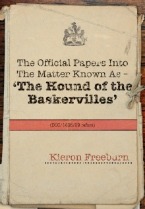 The Official Papers Into The Matter Known As “The Hound of The Baskervilles” by Kieron Freeburn is a great addition for those who like to delve further into the Baskerville case. Written as a case file it includes reports by the Metropolitan police, the Coroner (on Sir Charles and the convict Selden), the Devon County Constabulary, and much more.




 Kieran McMullen
